5-HTP: available forms and which to choose
5-HTP is sold as capsules, tablets, gummies and multi-component "mood and sleep formulas." At first glance the difference between them is only convenience, but in reality the form affects tolerability, dosing accuracy and even the safety of combinations. The editors examined the main options and the criteria for choosing a quality product.
Raw material: griffonia seed extract
Practically all 5-HTP on the supplement market is obtained from the seeds of Griffonia simplicifolia — a shrub from West Africa. The seeds contain a significant amount of 5-hydroxytryptophan; it is extracted, purified and concentrated. High-performance liquid chromatography is used to determine the content (Lemaire, Adosraku, 2002).
Two description variants are found on labels. The first is "5-HTP (from Griffonia simplicifolia seed extract)," where the amount of pure 5-HTP in milligrams is indicated. The second is "griffonia extract standardized to X% 5-HTP," where the mass of the entire extract is indicated. In the second case the actual amount of active substance has to be calculated on your own.
For example, 200 mg of extract standardized to 50% yields only 100 mg of 5-HTP. Careless reading of the label easily leads to a dosing error one way or the other, so the editors advise choosing products that directly indicate the content of 5-HTP itself.
A high degree of purification matters not only for dosing accuracy. Impurities in the plant raw material and by-products of processing are the main risk factor associated with the history of eosinophilia-myalgia syndrome (Klarskov et al., 2003).
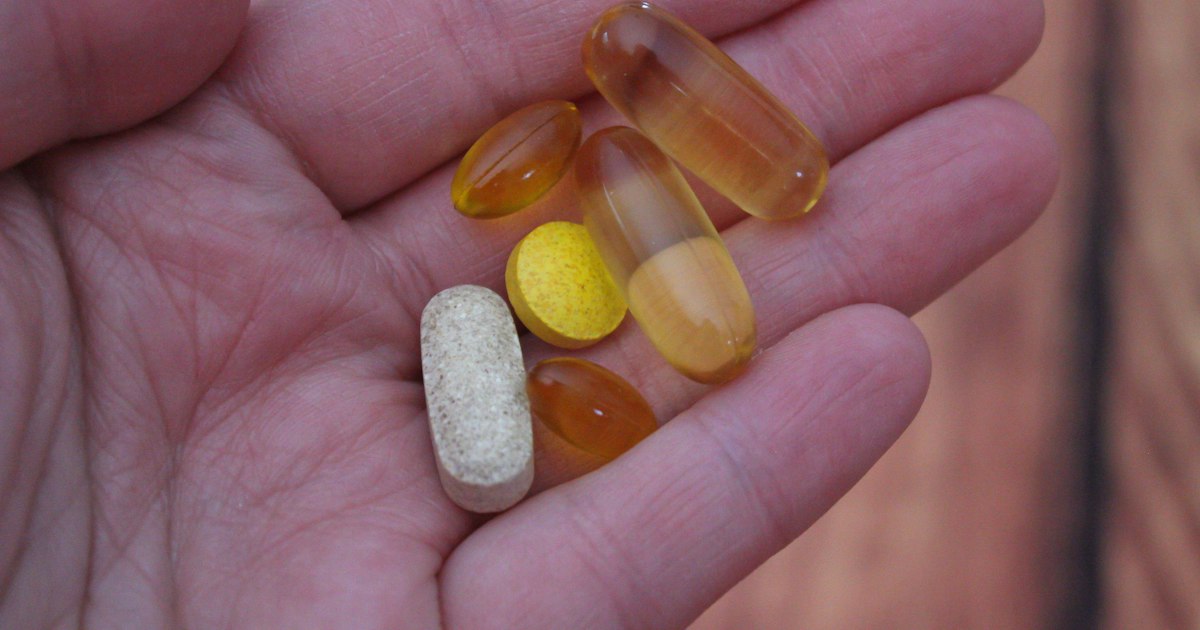
Immediate-release capsules and tablets
The most common form is gelatin or plant-based capsules of 50 or 100 mg. They disintegrate quickly in the stomach, and 5-HTP is absorbed within the first hour. Such a profile gives a relatively sharp peak in concentration, with which nausea and discomfort are associated in some people.
The advantage of 50 mg capsules is flexibility. They allow you to start with the minimum amount and divide the daily dose into several intakes, which is the main strategy for reducing side effects. 100 mg capsules are convenient if this amount has already been verified for tolerability.
Tablets contain more excipients and may disintegrate somewhat more slowly, but there is no fundamental difference in absorption compared with capsules. For people on a vegetarian diet it is important to pay attention to the capsule material.
5-HTP powder is almost unavailable for sale, and this is justified: at amounts of tens of milligrams it is impossible to measure powder without laboratory scales, and an error of several times over is quite real.
| Form | Typical content | Advantages | Limitations |
|---|---|---|---|
| Capsules | 50 or 100 mg | Flexible dosing, fast absorption | Peak concentration, possible nausea |
| Tablets | 50–100 mg | Stability, convenience | More excipients |
| Enteric-coated tablets | 50–100 mg | Possibly less stomach irritation | Little evidence of advantage, later onset of action |
| Chewable forms, gummies | varies | Taste, convenience | Sugar, less precise dosing, accessibility to children |
| "Mood and sleep" complexes | often 25–100 mg | Several components in one | Interactions, hidden serotonergic plants |

Enteric-coated and slow-release forms
Some manufacturers offer tablets with an enteric coating that does not break down in the acidic environment of the stomach. The idea is to reduce the contact of 5-HTP with the stomach lining and thereby nausea. Logically this looks convincing, but the editors did not find comparative clinical studies of the tolerability of enteric-coated and ordinary forms.
It should be remembered that nausea from 5-HTP has not only a local but also a systemic origin: it is associated with serotonin formed in the intestine and acting on the vomiting center. Therefore the coating can reduce but not eliminate this problem.
A separate direction is slow-release forms. In the scientific literature the concept of slow-release 5-HTP is considered as an adjunct to antidepressants in treatment-resistant depression (Jacobsen et al., 2016). This is an investigational medical approach under medical supervision, not a consumer product, and it cannot be transferred to independent use.
Products on the supplement market labeled "time release" have no standardized requirements for the release profile, and their claimed advantages are usually not confirmed by data.
Combination products: what is added to 5-HTP
Vitamin B6.The most common partner, since the enzyme that converts 5-HTP into serotonin requires the active form of B6. However, this same enzyme also works in the periphery, so additional B6 could theoretically enhance peripheral serotonin formation rather than direct it to the brain. If there is no B6 deficiency, the benefit of adding it is doubtful.
Melatonin."Sleep" combinations pair the serotonin precursor with ready-made melatonin. Melatonin has its own evidence base regarding circadian disorders, and in such a formula it is probably melatonin that provides the main effect. For people who want to try a sleep aid, it is more logical to start with a single component.
Plant components.The greatest concern is caused by complexes with St. John's wort (Hypericum perforatum), which itself has serotonergic activity and interacts with many drugs by inducing liver enzymes. Combining 5-HTP with St. John's wort in a single capsule increases the risk of serotonergic reactions.
Magnesium, theanine, GABA.These components are mostly neutral regarding interaction with 5-HTP, but their amounts in complexes are often small and have rather a marketing significance.
- Avoid complexes with 5-HTP and St. John's wort or SAMe.
- Check whether the amount of 5-HTP is indicated separately, not as part of a "blend."
- Discuss the combination with melatonin with a doctor if sleep problems are prolonged.
Purity, certification and selection criteria
For 5-HTP the question of quality is especially acute because of the history with impurities. Conscientious manufacturers test each batch by chromatography and are willing to provide a certificate of analysis indicating the 5-HTP content and a check for foreign substances.
The presence of independent certification (for example, USP Verified, NSF, Informed Sport) means that the product has been checked for conformity with the stated composition and the absence of banned substances. For athletes who undergo doping control this is important, since 5-HTP itself is not banned and the risk lies in contamination.
Pay attention to the manufacturing date, storage conditions (dry, cool, protected from light) and to keeping the packaging out of reach of children — especially in the case of chewable forms that may be perceived as candy.
The optimal choice for most people is 50 mg capsules with a clearly indicated 5-HTP content, from a manufacturer with transparent quality control, without serotonergic plant additives.
Editorial conclusions
The main thing when choosing 5-HTP is not the form but the purity and transparency of the composition. Look for products with a directly indicated amount of 5-HTP and a confirmed batch analysis.
50 mg capsules are the most flexible option. Enteric-coated and "slow-release" forms are logical, but their advantages are not proven.
Complexes with B6 and melatonin are acceptable, but they do not make sense for everyone; the editors advise avoiding combinations with St. John's wort.
Read also: "How to take 5-HTP: dosage, timing, duration," "Side effects of 5-HTP" and "L-tyrosine: available forms and which to choose."
References
- Lemaire PA, Adosraku RK. An HPLC method for the direct assay of the serotonin precursor, 5-hydroxytrophan, in seeds of Griffonia simplicifolia. Phytochem Anal. 2002;13(6):333–337.
- Turner EH, Loftis JM, Blackwell AD. Serotonin a la carte: supplementation with the serotonin precursor 5-hydroxytryptophan. Pharmacol Ther. 2006;109(3):325–338.
- Jacobsen JPR, Krystal AD, Krishnan KRR, Caron MG. Adjunctive 5-hydroxytryptophan slow-release for treatment-resistant depression: clinical and preclinical rationale. Trends Pharmacol Sci. 2016;37(11):933–944.
- Klarskov K, Johnson KL, Benson LM, et al. Eosinophilia-myalgia syndrome case-associated contaminants in commercially available 5-hydroxytryptophan. Adv Exp Med Biol. 2003;527:183–192.
- Das YT, Bagchi M, Bagchi D, Preuss HG. Safety of 5-hydroxy-L-tryptophan. Toxicol Lett. 2004;150(1):111–122.
- Birdsall TC. 5-Hydroxytryptophan: a clinically-effective serotonin precursor. Altern Med Rev. 1998;3(4):271–280.
Andriy Melnyk
A strength-sports coach and author of programs for beginner and intermediate levels. Writes about training planning.